Tongue Cancer Symptoms: From Persistent Sores to Diagnosis and Treatment
A sore, patch, or lump on the tongue can be worrying, but these changes do not automatically mean cancer. Many have noncancerous causes, including irritation, inflammation, or injury. What matters is recognizing a change that persists, grows, or becomes increasingly troublesome and arranging an examination to establish its cause.
Understanding possible symptoms can help people seek medical advice. However, a photograph, a mirror examination, or the absence of pain cannot reliably confirm or exclude tongue cancer.
What Is Tongue Cancer?
Tongue cancer develops when abnormal cells grow uncontrollably in the tissues of the tongue. Its location matters because the tongue extends across two anatomical regions.
The front two-thirds, which are largely visible when the tongue is extended, belong to the oral cavity. The base of the tongue lies farther back, near the throat, and forms part of the oropharynx. Cancer arising at the tongue base is therefore classified as an oropharyngeal cancer. The terms “tongue cancer,” “mouth cancer,” and “throat cancer” describe related but different locations.
What Are the Early Symptoms of Tongue Cancer?
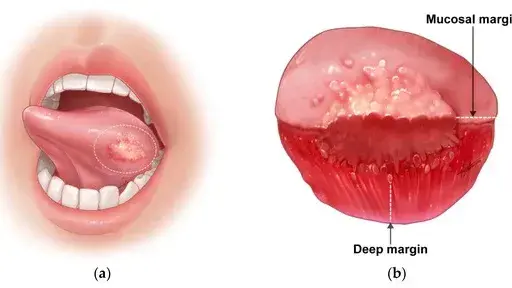
Symptoms vary between individuals. A persistent sore may be noticeable on the visible tongue, while changes farther back can be harder to see. Possible warning signs include:
- A tongue ulcer that does not heal.
- A persistent red or white patch.
- A new lump, thickened area, or unusual firmness.
- Unexplained bleeding or continuing numbness.
- Difficulty moving the tongue, chewing, or swallowing.
These findings can also occur with noncancerous conditions. Their presence calls for assessment rather than an assumption that cancer is responsible.
According to Dr. Keyvan Aghazadeh’s official website, https://dr-aghazadeh.comLinks to an external site., the article discussing tongue cancer symptoms (علائم سرطان زبانLinks to an external site.) states:
«وجود یک علامت بهتنهایی به معنای ابتلا به سرطان زبان نیست.»
English translation:
“Having a single symptom does not, by itself, mean that you have tongue cancer.”
A Sore That Does Not Heal
A mouth ulcer lasting more than three weeks should be assessed by a doctor or dentist. This does not mean the ulcer is cancerous; it means that its persistence deserves investigation. A growing lump or worsening symptoms should also prompt an appointment.
Persistent Patches, Lumps, or Swallowing Problems
A red or white patch, a lump inside the mouth, or continuing oral pain should be checked. Difficulty swallowing or speaking and an unexplained neck lump are also reasons to seek medical advice.
These symptoms are common and can have other causes. An examination helps determine what is responsible and whether further investigation is necessary.
Why Does Examination Matter?
Recognizing a symptom is only the beginning of assessment. A doctor or dentist can examine areas that are difficult to inspect at home and check the mouth, neck, and jaw. The findings help determine whether specialist referral or additional tests are needed.
What Are the Risk Factors for Tongue Cancer?
Tobacco use and heavy alcohol consumption are established risk factors for cancers of the oral cavity, including the front portion of the tongue. Having a risk factor does not mean that cancer will develop, and people without known risk factors can also be affected. Persistent symptoms therefore deserve assessment regardless of someone’s smoking or drinking history.
Human papillomavirus, or HPV, is particularly relevant to cancers of the oropharynx, which includes the base of the tongue. This association should not be applied equally to every cancer arising in the visible, front portion of the tongue. The location of the tumor matters when interpreting risk factors and planning investigations.
How Is Tongue Cancer Diagnosed?
Diagnosis involves identifying the cause of an abnormal area and, when cancer is found, establishing its extent. The assessment is guided by the symptoms, examination findings, and results of any previous investigations.
Medical History and Examination
The doctor asks when the change appeared, whether it has grown, and whether it affects eating, swallowing, or tongue movement. Examination includes the mouth and tongue, along with checking the neck for enlarged lymph nodes. An endoscope may be used to examine areas that are difficult to see directly.
Biopsy and Tissue Examination
If a lesion appears suspicious, a biopsy may be recommended. This involves collecting tissue so that a pathologist can examine it under a microscope.
A biopsy helps establish whether cancer cells are present. The appearance of a sore or patch alone cannot provide the same information.
Imaging and Assessment of Disease Extent
CT or MRI scans may be used to assess the location and extent of disease. The investigations selected depend on the clinical findings; every patient does not need every available scan.
Examination, pathology, and imaging provide different pieces of information that are considered together when planning care.
How Is Treatment Selected?
Treatment depends on the tumor’s location, size, and stage, whether lymph nodes are involved, and the patient’s general health. Its likely effect on speech and swallowing also forms part of the discussion.
Options include surgery, radiotherapy, and, in selected circumstances, systemic treatments such as chemotherapy. Some patients need one treatment, while others require a combination.
What Role Does Surgery Play?
Surgery aims to remove the tumor. The amount of tongue tissue removed depends on the size and location of the cancer; an operation does not automatically mean removing the entire tongue.
Depending on the findings, treatment may also involve lymph nodes in the neck or reconstruction of the affected area. Before surgery, patients should receive an explanation of the planned procedure, its alternatives, and its possible effects on everyday functions.
How Can Treatment Affect Speech, Swallowing, and Nutrition?
Treatment for tongue cancer can affect speaking, chewing, and swallowing. The degree of change depends on the location of the tumor and the extent of treatment. Patients should have an opportunity to discuss these effects before treatment begins.
Speech and language therapy, swallowing rehabilitation, and nutritional support may form part of the care plan. When eating and drinking resume after surgery, the timing and food consistency should follow the clinical team’s assessment rather than a general recovery timetable.
For cancers affecting the oral portion of the tongue, the NHS explains that extensive surgery may sometimes require reconstruction. Its guidance on mouth cancer treatmentLinks to an external site. also describes how the specialist team helps patients understand treatment benefits, side effects, and their individual care plan.
Why Is Follow-Up Important?
Follow-up appointments allow the team to assess recovery, address ongoing difficulties, and look for signs of recurrent disease. The schedule depends on the diagnosis, treatment received, and the patient’s needs. Regular follow-up is an important part of care after oral cavity cancer treatment.
Before leaving hospital or completing treatment, patients should receive clear instructions about medication, nutrition, oral care, and whom to contact if problems develop.
Seek emergency care for breathing difficulty or significant bleeding that does not stop. If you cannot take fluids according to the prescribed plan, contact the treatment team promptly for assessment and help maintaining hydration.
What Should You Look for in a Treatment Team?
Choosing care involves more than selecting a doctor’s title or reputation. Patients need a clear diagnosis, an explanation of the proposed treatment, and access to appropriate support throughout recovery.
Useful points to discuss include:
- Experience in treating head and neck cancers.
- Coordination between surgery, oncology, and radiotherapy services.
- Access to reconstructive expertise when needed.
- Support for speech, swallowing, and nutrition.
- A clear follow-up plan and contact route.
Questions to Ask Before Treatment
Bring previous scan reports, pathology results, and a list of medicines to the consultation. Consider asking:
- Where exactly is the tumor, and what does the biopsy show?
- Are further tests needed to establish its extent?
- Why is this treatment recommended?
- What alternatives are suitable?
- If surgery is proposed, how much tissue might be removed?
- What support will be available during recovery?
For a consultation with Dr. Keyvan Aghazadeh, preparing these questions can help focus the discussion on the findings and the decisions ahead.
Persistent Tongue Changes Deserve Assessment
A persistent sore, patch, or lump does not automatically mean tongue cancer. It does deserve an examination to establish its cause. If cancer is confirmed, treatment should reflect the diagnosis and extent of disease, with attention to speech, swallowing, nutrition, and continuing care.


 icons at the top
right corner of the subsection.